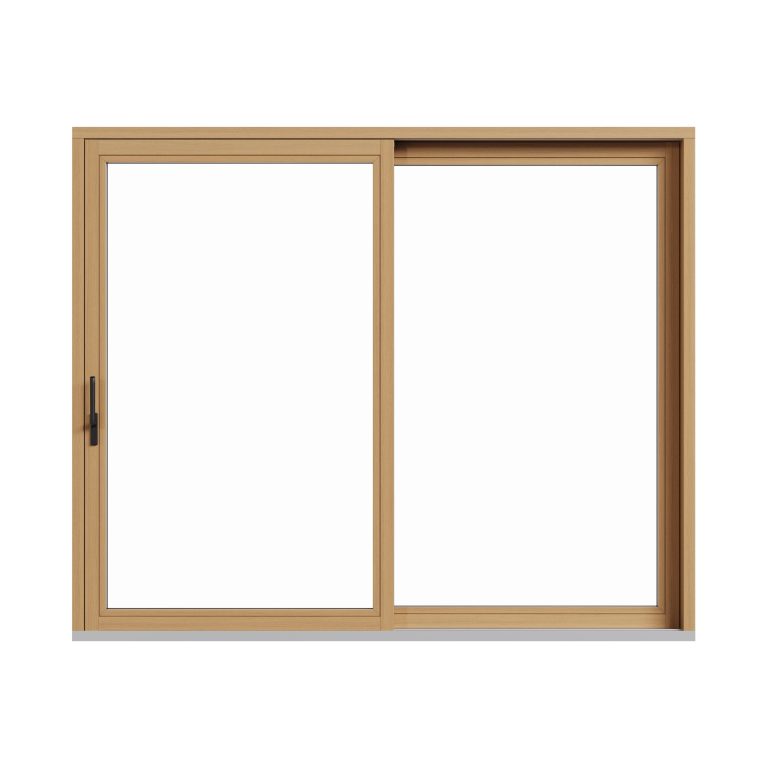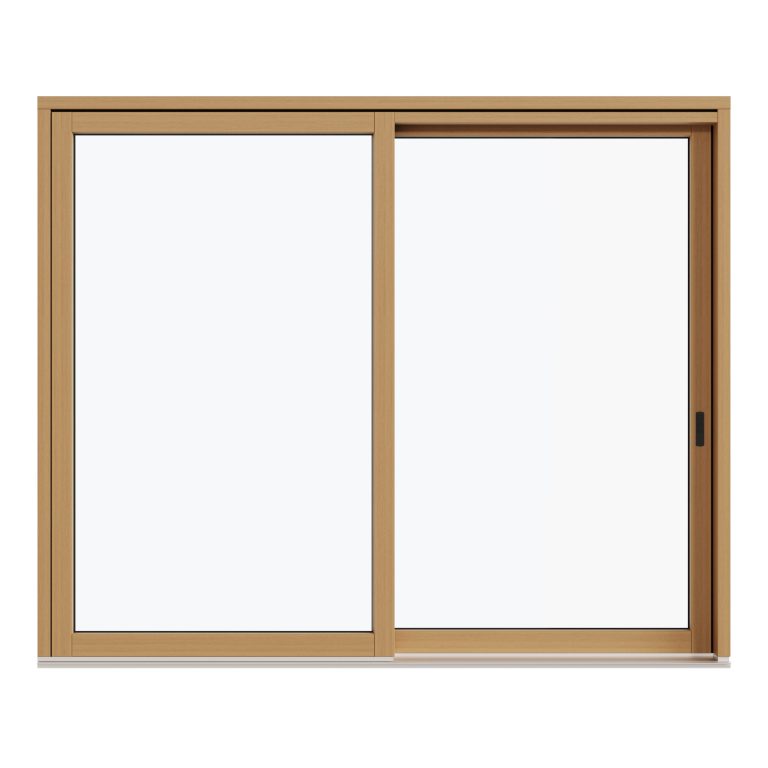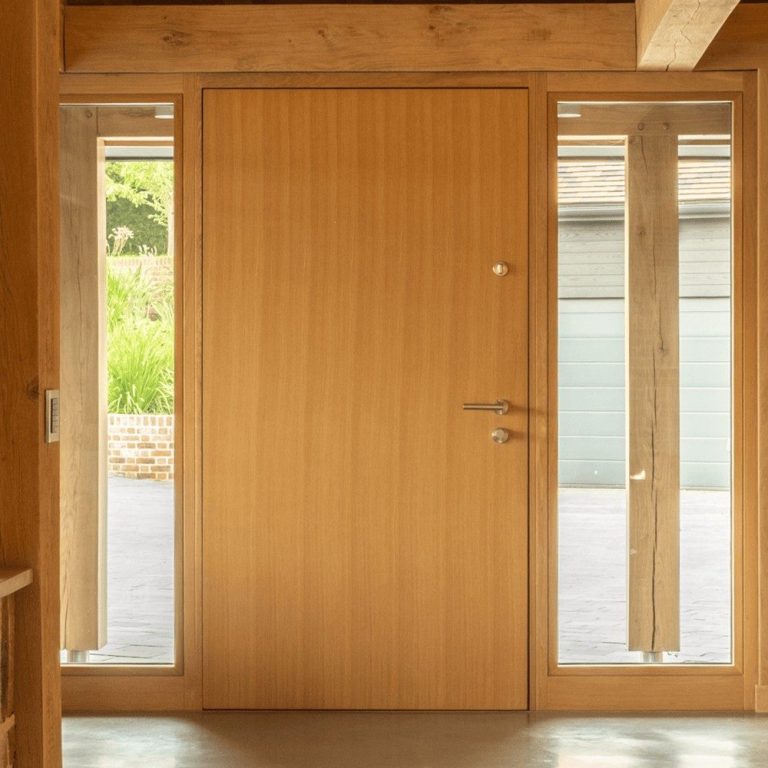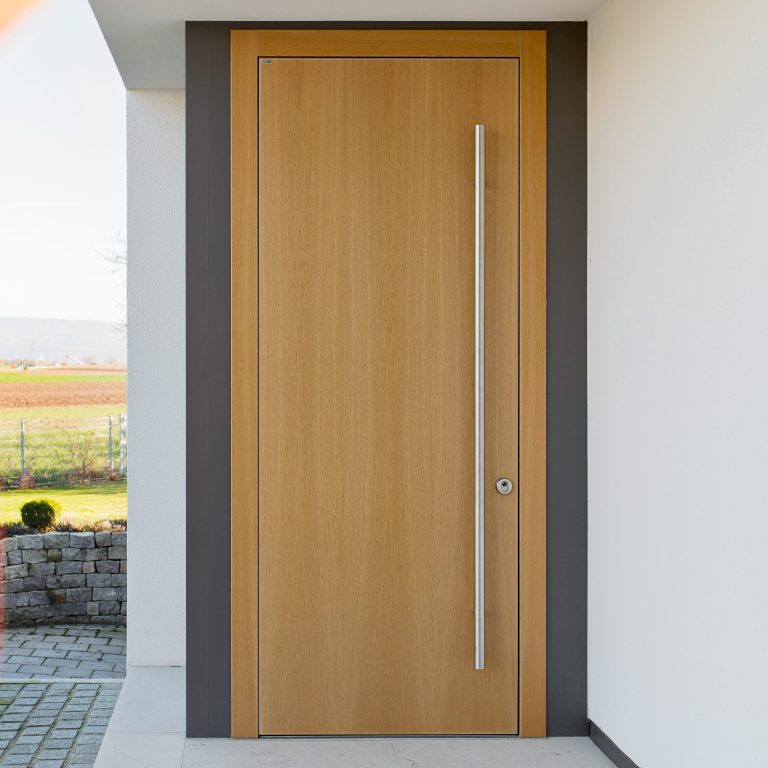
A window U-value measures how much heat passes through a complete window. The lower the U-value, the better the window is at reducing heat loss and improving thermal insulation. For UK replacement windows, 1.4 W/m²K or lower is an important benchmark, while 1.2 W/m²K or lower is strong modern performance, and 0.8-1.0 W/m²K is typically associated with high-performance triple glazing and low-energy building design. Current UK guidance also separates older Part L requirements from the newer 2026 Approved Document L framework, which supports Part L of the Building Regulations in England.
For Ecovia projects, U-values are not treated as a standalone number. They sit within a wider specification: frame material, whole-window performance, airtightness, glazing build-up, acoustic control, weather performance, solar gain, ventilation and architectural intent. That is especially important for large glazed elevations, sliding doors, low-energy homes and architect-led renovations where comfort, detailing and performance all need to work together.
Table of Contents
What is U-value in windows?
A U-value is the rate of heat transfer through a building element, measured in W/m²K. In plain English, it tells you how much heat escapes through one square metre of window for every one degree of temperature difference between inside and outside.
- A high U-value means heat moves through the window more easily.
- A low U-value means better window thermal insulation.
This is why low U-value windows are usually more energy efficient, more comfortable to sit beside in winter and better suited to projects aiming for lower heating demand.
For example, if a window has a U-value of 1.2 W/m²K, it loses less heat than a window with a U-value of 2.6 W/m²K under the same conditions. That difference becomes especially noticeable in exposed sites, large glass areas and rooms where people sit close to the glazing.
Whole-window U-value vs glass U-value
When comparing window U-values, always check whether the number refers to the whole window or only the glass unit.
| Term | What it measures | Why it matters |
| Uw / whole-window U-value | Glass, frame, spacer, seals and configuration | The most useful number for real specification and compliance |
| Ug / glass U-value | Centre-pane glass only | Lower than the whole-window value, so it can look better in marketing |
| Uf / frame U-value | Frame thermal performance | Important because frames can raise the overall U-value |
| Psi / spacer value | Thermal bridge at the glass edge | Warm-edge spacers help reduce edge heat loss |
Industry resources consistently warn that the centre-pane value is not enough because the frame and spacer usually perform differently from the glass.
For architects and specifiers, the key figure to request is the whole-window Uw value, ideally calculated for the actual size and configuration. This becomes even more important under the updated 2026 Future Homes and Buildings Standards, where actual performance is increasingly tied to actual window size, configuration and project-level modelling.
What is a good U-value for windows?
A good U-value for windows depends on the project type, but below is a practical guide:
| Window type / specification | Typical U-value range | Performance meaning |
| Old single glazing | Around 4.8-5.8 W/m²K | Poor thermal insulation |
| Older double glazing | Often around 2.4-3.0+ W/m²K | Better than single glazing, but weak by modern standards |
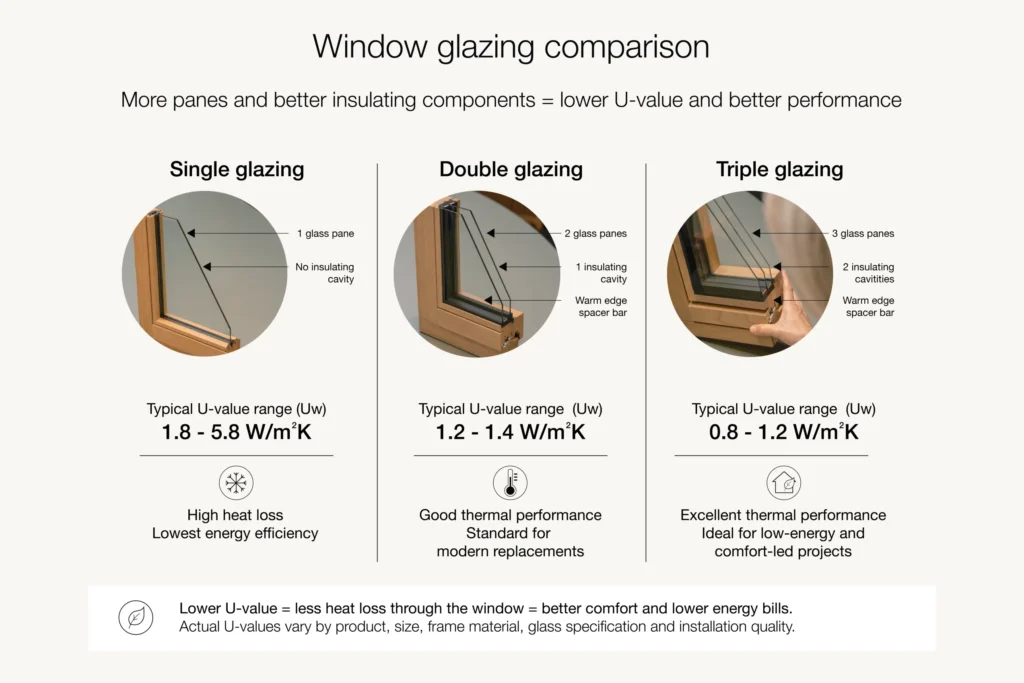
| Modern double glazing with low-E coating and gas fill | Around 1.2-1.4 W/m²K | Good modern replacement performance |
| High-performance double glazing | Around 1.0-1.2 W/m²K | Strong performance where correctly specified |
| Triple glazing | Around 0.8-1.2 W/m²K | Excellent for low-energy, exposed or comfort-led projects |
| Passivhaus-level window specification | Often around 0.8 W/m²K or lower | Suitable for very low-energy design |
These figures align with the ranges used across leading UK window guides and energy-efficiency resources, though exact values vary by product, frame, size and configuration.
So, is 1.2 a good U-value for windows? Yes, a window U-value of 1.2 W/m²K is a good modern figure, particularly for high-quality double glazing or entry-level triple glazing. For premium low-energy homes, exposed locations or large-format glazing, a lower U-value closer to 0.8-1.0 W/m²K is usually more appropriate.
Ecovia’s own product range is designed for this higher-performance end of the market. The Vantage Modern Window is listed with a U-value of up to 0.8 W/m²K, Class 4 airtightness and sound reduction up to 45 dB, while the Vantage Classic Double Window is listed with a U-value of up to 0.69 W/m²K, Class 4 airtightness and sound reduction up to 45 dB.
Double glazed window U-value vs triple glazing
The U-value of double glazing has improved significantly over time. Older double glazing can sit around 2.6 W/m²K or worse, while modern double glazing with low-E glass, argon gas and warm-edge spacer bars can perform around 1.2-1.4 W/m²K.
Triple glazing usually goes lower because it adds a third pane and a second insulating cavity. However, triple glazing is not automatically better just because it has three panes. The cavity width, gas fill, spacer, coatings, frame and installation all matter.
| Question | Double glazing | Triple glazing |
| Typical modern U-value | Around 1.2-1.4 W/m²K | Around 0.8-1.2 W/m²K |
| Cost | Usually lower | Usually higher |
| Weight | Lighter | Heavier; may need stronger frames |
| Comfort near glass | Good | Excellent, especially in cold/exposed rooms |
| Acoustic benefit | Good with the right glass | Can be better, but acoustic glass design matters more than pane count alone |
| Best use case | Standard replacements, balanced budgets, some renovations | Low-energy homes, large glass areas, exposed sites, premium specifications |
Energy Saving Trust notes that triple glazing is usually around 20% more expensive than double glazing, but can be worthwhile where cold, noise or comfort are major factors.
For Ecovia, the decision is specification-led rather than generic. Triple glazing is often the right choice for high-performance timber windows, sliding doors and large architectural glazing, but the final specification should also consider solar gain, overheating risk, frame design and installation detailing.
U-value, G-value and window energy rating
A low U-value is important, but it is not the only window performance metric.
| Metric | Meaning | Better direction |
| U-value | Heat loss through the window | Lower is better |
| G-value | Solar heat passing through the glass | Depends on room orientation and overheating risk |
| Window Energy Rating | Overall rating using heat loss, solar gain and air leakage | Higher rating is better |
| Airtightness | Uncontrolled air movement through the window | More airtight is better, with correct ventilation |
The G-value of windows describes solar gain – the proportion of solar energy that passes through the glass.
- A higher G-value can help a south-facing room gain useful winter heat, but it can also increase overheating in summer.
- A lower G-value, often through solar-control glass or shading, can be better for large glazed elevations that receive direct sun.
Window Energy Rating is broader than U-value alone. BFRC explains that its energy ratings assess heat loss, solar gain and air leakage, and Window Energy Ratings scores run from E to A++, with A++ being the most efficient.
This is why an expert specification should not simply chase the lowest number. The right window balances U-value, G-value, airtightness, daylight, ventilation, acoustic performance and architectural use.
How to calculate U-value of a window?
For a simple insulation calculation, U-value is the inverse of total thermal resistance:
U-value = 1 ÷ total R-value
However, that is only a simplified principle. Real window U-values are more complex because a window is not a single material. It includes glass, frame, spacer bars, seals, cavities, coatings, gas fill and installation interfaces.
To check the U-value of a window, ask for:
- The whole-window Uw value, not only centre-pane Ug.
- The size and configuration used for the calculation.
- Whether the value is tested, calculated or certified.
- The glazing build-up, including low-E coating, gas fill and spacer type.
- Airtightness, weather performance and acoustic ratings.
- Any project-specific implications for ventilation, overheating or Part L compliance.
If a supplier only provides the glass U-value, the window may look better on paper than it performs as an installed product. This is a common gap in lower-quality comparisons and one reason specifiers should compare like-for-like data.
Speak to one of our experts to get started
Whatever your requirements, we’ll advise, inspire and support your plans to deliver your architectural vision.
Do energy-efficient windows really work?
Yes, energy efficient windows work, but the benefit is not only about headline bill savings.
Energy-efficient windows can reduce heat loss, improve comfort, reduce draughts and cold spots, reduce condensation and improve acoustic comfort. Upgrading from single glazing to A-rated double glazing in an entirely single-glazed semi-detached home can save around £140 per year in Great Britain and reduce CO₂ emissions by around 380 kg per year.
First-hand homeowner discussions show the same pattern: many people notice comfort, reduced coldness near windows and sound reduction more clearly than they can measure bill savings. One homeowner discussion described the main benefit as better “coziness” and sound, while another noted that stopping draughts and coldness near windows allowed the home to feel comfortable at a slightly lower thermostat setting.
The same discussions also highlight an expert point: installation matters. Poor air sealing around old frames can undermine expensive new glazing, while good fitting, airtightness and junction detailing can make a major difference to real-world performance.
How much do energy efficient windows cost?
Energy-efficient window costs vary widely depending on material, size, opening type, glazing specification, installation complexity and whether the project involves standard replacement windows or bespoke architectural glazing.
Energy Saving Trust gives a broad consumer benchmark of around £12,000 for a set of A-rated windows for a semi-detached house, but premium timber, timber-aluminium, large-format glazing and architect-led projects require project-specific pricing.
For homeowners looking for affordable energy-efficient windows, the smartest approach is usually not to choose the cheapest unit. Instead, prioritise:
- the worst-performing or most-used rooms first;
- whole-window U-value rather than centre-pane claims;
- airtight installation and proper sealing;
- durable frame materials;
- long-term comfort, maintenance and architectural fit.
For architects and developers, the cost question is more strategic: a better window specification can support the wider building fabric, help manage comfort at the glass line, and reduce design compromises elsewhere.
Our approach to low U-value windows
Ecovia designs timber and timber-aluminium glazing systems for projects where performance and architecture carry equal weight. The Vantage range offers Ecovia’s purest timber expression, with robust windows and doors and the company’s best thermal performance at its most accessible prices. The Endurance range builds on that with an external aluminium shell for harsher conditions and contemporary design possibilities.
That makes Ecovia especially relevant for:
- architect-led homes;
- low-energy and Passivhaus-oriented projects;
- large glazed openings;
- timber windows and sliding doors;
- exposed rural, coastal or urban sites;
- homeowners who want energy conserving windows without compromising design.
The goal is not simply to install “the most energy efficient windows” in isolation. The goal is to specify glazing that supports the building: low U-values, controlled solar gain, excellent airtightness, reliable weather performance, refined timber detailing and long-term comfort.
Final specification note
For a homeowner, a good window U-value means a warmer, quieter and more comfortable home. For an architect or specifier, it is a performance input that affects compliance, comfort, detailing, overheating risk, acoustic strategy and whole-building design.
Ecovia’s role is to help bring those requirements together: precision timber and timber-aluminium glazing, low U-values, refined detailing and project-specific support from early specification through to installation.
FAQ: Window U-values, G-values and energy efficient windows
What is U-value in windows?
U-value measures how much heat passes through a window. It is expressed in W/m²K. A lower U-value means better window thermal insulation and less heat loss.
What is a good U-value for windows?
For UK replacement windows, 1.4 W/m²K or lower is an important benchmark. 1.2 W/m²K is good modern performance, while 0.8-1.0 W/m²K is excellent and usually associated with high-performance triple glazing.
Is 1.2 a good U-value for windows?
Yes. A U-value of 1.2 W/m²K is good for windows. It is better than the basic replacement-window benchmark and suitable for many energy-efficient projects.
What is the average U-value for windows?
Older single glazing can be around 4.8-5.8 W/m²K. Older double glazing may be around 2.4-3.0 W/m²K or worse. Modern double glazing often sits around 1.2-1.4 W/m²K, while triple glazing often reaches 0.8-1.2 W/m²K.
What is the U-value of 20-year-old double glazing?
The U-value of 20-year-old double glazing depends on the unit, glass coating, gas fill, spacer and frame. As a rough guide, many older double glazed units perform around 2.6 W/m²K or worse, especially if seals have failed or the frames are draughty.
How do I know if my windows are energy efficient?
Check the whole-window U-value, Window Energy Rating, airtightness, frame condition, draughts, condensation, cold spots and whether the unit has low-E glass, gas fill and warm-edge spacers.
How do I check the U-value of a window?
Ask the manufacturer or installer for the whole-window Uw value. Do not rely only on the glass Ug value. For existing unknown windows, a precise figure is difficult without manufacturer data or specialist assessment.
What is G-value in glass?
G-value measures how much solar heat passes through the glass. A higher g-value allows more solar warmth in; a lower g-value reduces solar gain and can help manage overheating.
What is window certification G-value?
Window certification may include U-value, g-value and air leakage data as part of the broader Window Energy Rating. BFRC ratings, for example, consider heat loss, solar gain and air leakage together.
What are the most energy efficient windows?
The most energy efficient windows are usually high-performance double or triple glazed units with low whole-window U-values, insulated frames, warm-edge spacers, low-E coatings, good airtightness and correct installation. In premium projects, timber or timber-aluminium triple glazed systems can deliver very low U-values without compromising architectural quality.
Does replacing windows save energy?
Yes, replacing poor windows can save energy, especially when moving from single glazing or failed older double glazing to modern energy-efficient windows. Savings vary by property, heating system, installation quality and how draughty the old windows were.
How much can new windows save on energy?
Energy Saving Trust estimates around £140 per year for upgrading an entirely single-glazed semi-detached home to A-rated double glazing in Great Britain, though actual savings vary.
Are energy efficient windows tax deductible?
In the UK, replacement double glazing, secondary glazing, low-emissivity glass and other energy-efficient products are generally standard-rated for VAT, while specified energy-saving materials such as draught stripping and insulation may qualify under HMRC rules. Always check current tax guidance or speak to a tax adviser before making a financial decision.
What are the benefits of energy efficient windows?
The main benefits are reduced heat loss, improved comfort, fewer draughts and cold spots, reduced condensation, better acoustic comfort and lower heating demand. Premium low U-value windows also support better long-term building performance.